
Port pickup, warehousing, fulfillment and delivery from one asset-based team in Los Angeles. Get a quote for fulfillment that scales with your sales.
Cargo Theft: Why It Hits California & How to Prevent It
Key Takeaways
- Cargo theft is getting less frequent but far more expensive: Verisk CargoNet tracked about $719 million in estimated losses through September 2026, with the average stolen shipment worth roughly $448,000.
- California is still the most targeted state, and fraud schemes such as fictitious pickups now make up about one in four reported incidents.
- For importers, the strongest defense is fewer handoffs: verify every pickup, cut brokered legs and dwell time, and work with a 3PL that controls both the trucks and the warehouse.
Cargo theft is the stealing of freight while it moves through the supply chain or waits for its next move, whether thieves break into a trailer, drive off with a container, or trick a shipper into releasing a load to the wrong truck.
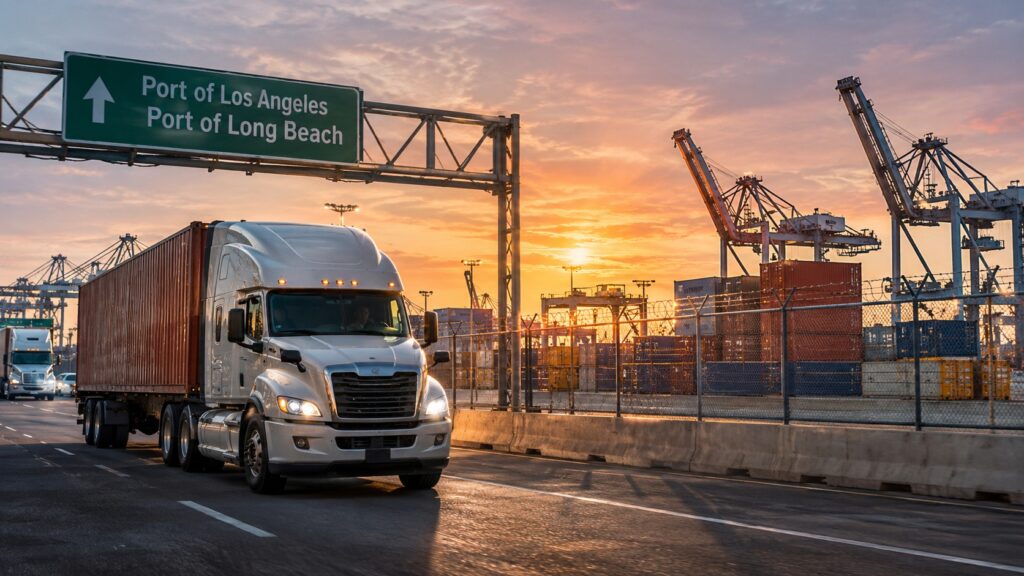
For brands importing through Los Angeles and Long Beach, the riskiest stretch is often the shortest one. Between the terminal gate and the warehouse dock, a container can change hands several times, sit on a chassis over a weekend, or be collected by a carrier nobody at your company has ever dealt with.
How Cargo Theft Happens: Straight, Strategic and Pilferage
Cargo theft falls into a few broad patterns, and each calls for different defenses.
Straight theft
Straight theft is the physical version: thieves break into a parked trailer, hook up to a loaded container on its chassis, or take the whole truck. It happens where freight sits unattended, such as truck stops, drop lots, yards and rail sidings, often over weekends when lots are lightly staffed.
Strategic cargo theft and freight fraud
Strategic cargo theft uses deception instead of force. Criminals impersonate a legitimate carrier or broker, often with a stolen identity or a hijacked email account, and collect a load the shipper hands over willingly. This is the core of freight fraud: fictitious pickups, spoofed load confirmations, and double brokering, where a load is passed to an unvetted carrier. In Q3 2026, fictitious pickups made up roughly a quarter of incidents reported to Verisk CargoNet, up from 18 percent a year earlier.
Pilferage and cyber-enabled theft
Pilferage is partial theft: a few cartons taken from a container or trailer, sometimes with a seal swapped so the shortage only shows up at delivery. Cyber-enabled theft feeds the other types, as phishing, compromised business email and hacked load boards give thieves the shipment details they need to arrive at the right dock with convincing documents.
Cargo Theft Statistics: Why Losses Keep Climbing
Reported thefts are falling, but the value of what gets stolen keeps rising. According to Verisk CargoNet, estimated losses jumped 60 percent in 2025 to nearly $725 million. Through September 2026, reported incidents fell 25 percent year over year, yet losses climbed 39 percent to $718.9 million, and the average stolen shipment was worth about 72 percent more, at $448,456.
Organized groups are simply choosing higher-value targets. Clothing and beauty products also rank among the goods insurers flag as high risk, because they are easy to resell and hard to trace. Travelers’ guide to cargo theft tactics and threats explains how commodity, timing and route combine into risk.
Why Southern California Is a Cargo Theft Hotspot
California logged 1,218 cargo theft incidents in 2025, more than any other state, and accounted for about a third of all incidents CargoNet recorded in Q3 2026, with Los Angeles, San Bernardino and Riverside counties standing out. The ports of Los Angeles and Long Beach feed one of the densest clusters of warehouses, rail yards and trucking routes in the country, so high-value freight is constantly moving through a small area and pausing along the way.
Rail cargo theft adds to the risk: thieves have raided containers on trains approaching downtown Los Angeles, and U.S. railroads put their 2024 theft losses at more than $100 million. The California Highway Patrol runs a dedicated Cargo Theft Interdiction Program for this reason.
Every Handoff Is an Opening: Where Import Freight Gets Exposed
Most cargo theft advice is written for carriers. It skips the shipper’s biggest lever, which is how many hands the freight passes through.
A typical import can move from a terminal to a drayage carrier, then to a yard where the container waits on a chassis, then to a warehouse, and finally to a brokered truck for the outbound move. Every step brings new people, a new pickup appointment and new paperwork, and each is a point where a fake carrier can show up or a container can sit unwatched over a weekend. Brokered legs carry the most strategic theft risk, because the shipper often does not know who is actually hauling the load.
Fewer handoffs means fewer openings. When one company pulls the container, receives it into its own building and moves the outbound freight on its own trucks, there is no anonymous carrier to impersonate and no gap in custody between vendors. That is how QX Logistix works as an asset-based 3PL in Los Angeles: our own fleet of 65+ trucks and three warehouses in Vernon and Commerce, so freight moves from the ship to the shelf without changing hands.
How to Prevent Cargo Theft: A Checklist for Shippers
Effective cargo theft prevention layers several controls, so one failure does not hand over the load.
Verify every pickup and carrier
Check the carrier’s DOT and MC numbers and contact details against official sources, not the email on the request. Match the driver, truck and trailer to what was dispatched, and treat last-minute pickup changes, especially on a Friday afternoon, as a red flag.
Cut handoffs and brokered legs
Map every party that touches an import and remove the ones you can. Where brokering is unavoidable, require the broker to name the actual carrier and prohibit re-brokering in your contract.
Secure yards, docks and dwell time
Freight that sits is freight at risk. Pull containers promptly, avoid leaving loaded trailers in unsecured lots, and keep staged freight inside fenced, lit, camera-covered facilities with controlled gates.
Track, seal and time shipments wisely
Use GPS or covert trackers on high-value loads, record high-security seal numbers at every handoff, and avoid leaving loaded freight idle over weekends and holidays, when theft has historically risen.
Have a response plan ready
Decide in advance who contacts police, your insurer and your logistics partner, and keep shipment details, seal numbers and tracking data ready. The sooner a theft is reported, the better the odds of recovery.
Questions to Ask Your 3PL About Cargo Security
Once freight leaves the port, your logistics partner’s controls become your controls. Before you sign, ask:
- Who actually hauls my containers: your own drivers and trucks, or brokered carriers?
- How do you verify drivers and pickups before releasing freight?
- Are your buildings fenced, gated and monitored by cameras around the clock?
- How is inventory tracked, and do you follow a security program such as CTPAT, the U.S. Customs and Border Protection partnership?
At QX Logistix, our own drivers pull your containers, our buildings are fenced and covered by 24/7 security cameras, every pallet and carton is tracked in Extensiv, and we are CTPAT compliant. Learn more about our operation and facilities.
Cargo Theft Prevention FAQs
How common is cargo theft?
Verisk CargoNet recorded 2,072 supply chain crime incidents in the U.S. and Canada through September 2026, down 25 percent from the same period in 2025. Those figures only cover reported cases, and some thefts, especially small pilferage losses, are never reported. Fewer incidents have not meant smaller losses, though, because thieves are targeting higher-value loads.
What is the most commonly stolen cargo?
Food and beverage products are the most frequently stolen category, according to Verisk CargoNet, with metals such as copper close behind in recent quarters. Household goods and electronics are also common targets. Cosmetics are drawing more attention too: reported cosmetics thefts rose in Q3 2026 even as overall incidents fell.
What is the difference between cargo theft and freight fraud?
Cargo theft is the broad term for any taking of freight in transit or storage. Freight fraud is the deception-based side of the problem: impersonating carriers or brokers, faking pickups, falsifying documents or redirecting payments. Not every freight fraud scheme steals cargo, since some target payments, but strategic cargo theft depends on fraud to get a shipper to hand over a load willingly.
What is the cargo theft red zone?
The red zone is the first stretch of a trip after pickup, commonly defined as the first 250 miles. Thieves often watch facilities and follow loaded trucks to the first stop, so insurers advise drivers not to stop in this zone. For imports through Los Angeles and Long Beach, the entire drive from the port to a nearby warehouse falls inside it.
What should you do if your cargo is stolen?
Report it right away to local law enforcement, then notify your insurer, your logistics provider and any carrier or broker involved, and share shipment details, seal numbers and tracking data. For fraud-based thefts such as fictitious pickups, a report to the FBI’s Internet Crime Complaint Center can also help. Industry databases like CargoNet collect theft reports and issue alerts that support recovery.
Keep Your Freight in One Set of Hands From Port to Door
Cargo thieves look for gaps: an unverified pickup, a weekend in an open lot, a load passed to a carrier nobody vetted. QX Logistix closes those gaps by running the trucks and the warehouses ourselves, from the ports to our buildings in Vernon and Commerce and on to your customers.
Whether you import apparel and footwear, beauty and cosmetics or other high-value consumer goods, request a quote to see how an asset-based 3PL keeps your freight under one team’s control